In Australia today, there’s a lot of discussion about the benefits of smart energy, including its positive environmental impacts and lower costs. But there are numerous health and wellbeing benefits as well.
Smart energy means using appliances, technologies, and energy consumption habits to manage electricity more sustainably. It involves the integration of smart systems that help people optimise their energy use in homes, office buildings, and community facilities.
Smart energy and buildings directly impact the health and wellbeing of the people living and working inside. In fact, smart energy solutions are a health and duty-of-care issue for Australian citizens.
Read on to learn how smart energy supports buildings with safer temperatures and cleaner air for occupants, workers, and owners.
What is smart energy?
Smart energy is an innovative approach to using energy more efficiently and sustainability, while unlocking greater convenience and cost savings for the consumer. Smart energy solutions and systems leverage interconnected digital devices to monitor, control, and optimise electricity use for a household, workplace, or community space. This approach also helps to improve air quality and temperature for the comfort of residents and occupants, workers, and visitors alike.
A smart energy management approach integrates renewable sources and smart meters into electrification strategies. It combines sophisticated technology, real-time data and decision-making, and active consumer participation to reduce resource wastage and to lower costs. At the same time, it fosters cleaner energy grids and promotes environmental conservation.
The building blocks: on-site solar and batteries, smart controls and monitoring, and electrified systems
The key building blocks of smart energy and greener power solutions include on-site solar and batteries, smart controls and real-time monitoring, and electrified systems instead of gas-powered ones.
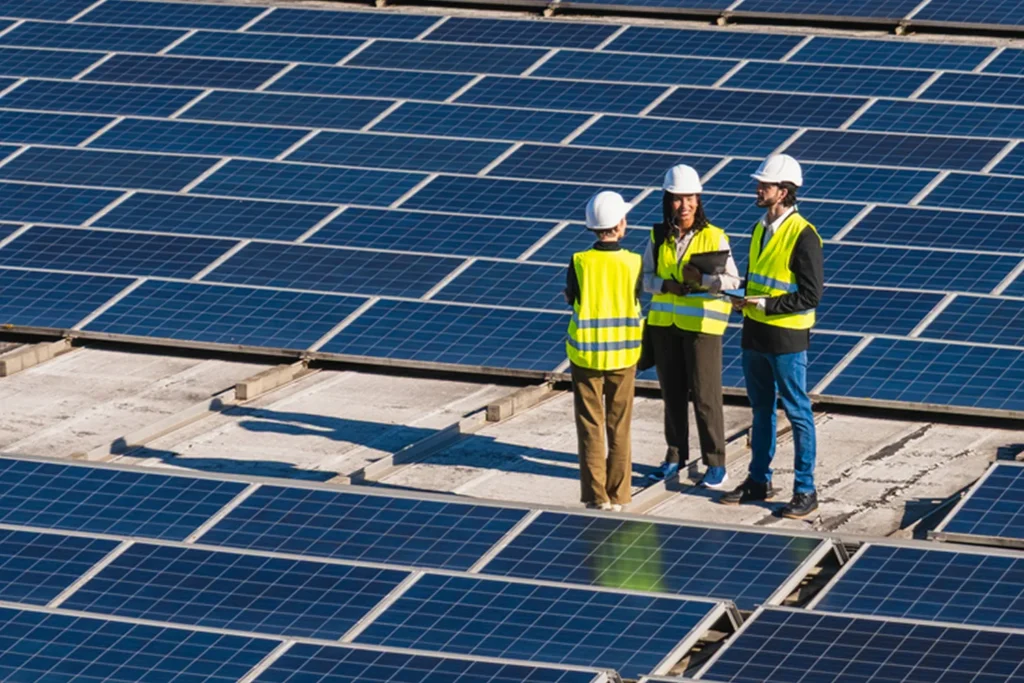
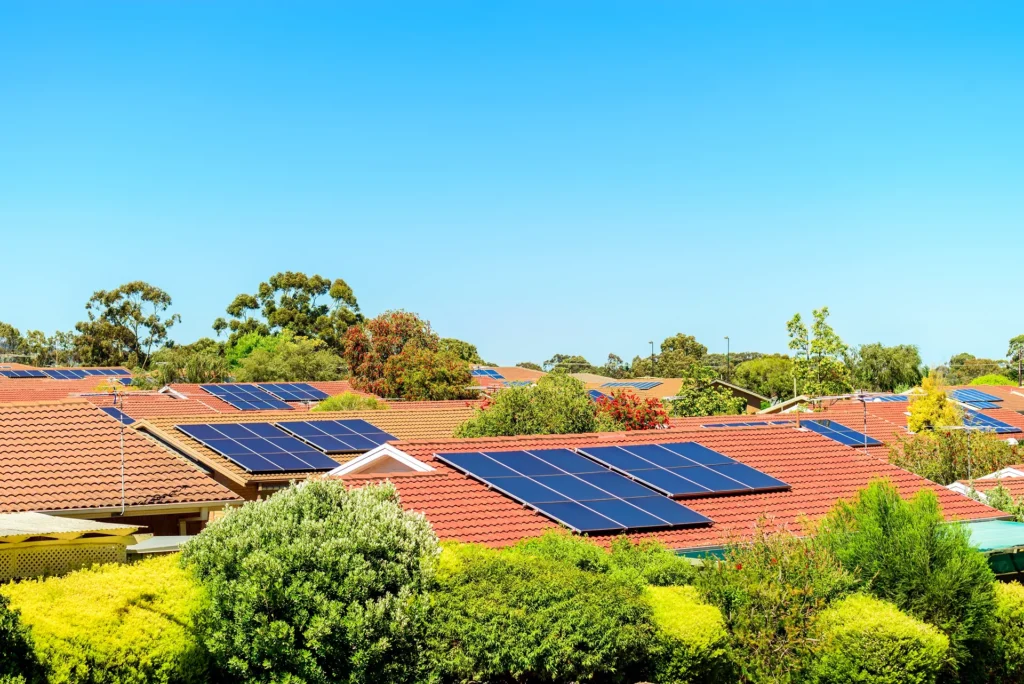
- On-site solar and batteries. On-site solar means solar power systems are installed directly on a property or building – for example, on rooftops or in parking lots – with electricity generated and consumed on-site. Having solar batteries on-site means that energy storage systems can capture and store excess electricity generated by solar panels and use these reserves at a later stage, even when solar generation is low, like at night or during power outages. This enables dwellings or businesses to reduce their reliance on grid electricity, boost energy independence and autonomy, lower electricity costs, and elevate sustainability outcomes.
- Smart controls and monitoring. Smart controls and smart monitoring are a complementary system that enables people to manage and oversee their home or property systems remotely (e.g. via an app). Smart monitoring features key benefits like real-time updates, remote access to security cameras, and the ability to control devices like lights and alarms anytime, anywhere.
- Electrification of systems.Introducing electrification systems into buildings means replacing gas-powered tools and appliances with electric ones, such as heat pumps and induction cooktops. This cuts down the costs associated with gas supply and reduces fossil fuel use for heating, cooking, and hot water. Plus, according to a statement by Asthma Australia, electrification contributes to healthier indoors environments by removing sources of indoor air pollutants, thereby reducing health and wellbeing risks for people living and working in these spaces.
The shift to renewables in Australia: why it matters
The Green Building Council of Australia recently announced that clean energy solutions aligned with the Green Star rating system are a disability and inclusion issue as much as an environmental one. Effective building design and management can safeguard vulnerable Australians from the growing health impacts of climate change and the cost-of-living crisis.
While the optimal temperature for human beings and nations is between 13°C and 18°C, many people live and work in regions or countries that frequently exceed this temperature range, including Australia, and particularly regional and rural Australian communities. This means it’s even more difficult to ensure comfortable and safe temperatures and good air quality in these regions.
As an example, elderly Australian citizens living in aged care facilities – and especially those in more isolated geographical areas – are at a very high risk of negative health impacts from inadequate heating and cooling. As such, smart energy in Australian aged care facilities and retirement villages must be a higher priority for government-led initiatives, energy providers, and property owners.
Taking action to combat health and wellbeing risks in Australia
The transition to renewables is forging forward in leaps and bounds, with the Federal Government striving to reach a target of 82% renewable energy by 2030. This is set to positively impact health and wellbeing outcomes for Australian occupants, working professionals, and property owners.
However, analysis by Net Zero Australia, which tracks Australia’s progress on the energy transition, uncovered the reality that renewable projects are actually getting larger and more complex, with plans taking longer to design and approve than ever before. Fortunately, the rate of approval per megawatt is improving year-on-year – but there is still a long way to go to fully integrate smart energy solutions in ways that support healthier buildings and communities in the long-term.
At a state level, the New South Wales (NSW) Government is focusing on solar and smart batteries for Government-owned buildings. They recently implemented virtual power plant (VPP) capabilities at 16 sites across regional NSW. This VVP initiative forms part of a high-level renewable energy transition, with the aim of stabilising the local electricity grid via back-up battery power while keeping electricity prices down for consumers.
An increasing focus on renewables at the top is also supported by Australia’s national science agency, CSIRO –in partnership with the Australian Energy Market Operator (AEMO) – which recently released the GenCost 2025–26 Final Report. The CSIRO-AEMO report findings reveal that renewable energy backed by battery storage is helping to protect Australia against global energy shocks and combat climate change.
Presently, the transition to cleaner and greener energy is providing the lowest-cost pathway for Australia’s electricity system to achieve net zero emissions. This has very positive and far-reaching flow-on effects for human health and wellbeing, as well as for environmental sustainability, Australian biodiversity, and conversation efforts in the face of extreme weather events and wildlife habitat loss.
Why energy systems shape occupant health
Smart energy management has many benefits, and smart energy systems greatly influence and shape occupant health. They do this by improving indoor air quality and thermal comfort, thereby reducing the risk of people developing asthma, respiratory issues, and other chronic health concerns.
Cleaner, greener, and more efficient energy systems help to form healthier living and working environments overall. As Australians spend up to 90% of their time indoors, these systems minimise pollutants and maintain consistent temperatures that offer comfort and good quality of life for people.
Research from the World Health Organisation (WHO) also reveals that 81% of homes in Australia fall below 18°C – against the WHO recommendations for a healthy minimum indoor temperature in winter. Such cold conditions put Australians at higher risk of health issues not only related to asthma but other conditions as well, like hypertension, arthritis, and even mental health challenges like anxiety and depression. Equally, overly hot indoor conditions put Australians at risk of complex health concerns.
Indoor air quality and building performance
Did you know that indoor air quality or IAQ affects everything from a person’s health and wellbeing to their level of comfort, happiness, cognitive performance, and productivity?
According to the World Green Building Council, recent industry studies show that green buildings with enhanced ventilation show up to an extraordinary 300% better cognitive function for workers. Enhanced IAQ can generate annual returns of up to $6,500 per occupant due to productivity gains.
Smart energy strategies like pollutant source reduction, better building ventilation, and real-time data monitoring and decision-making with built-in gas sensors can all help to create and maintain healthier indoor environments for Australians. This is especially important in a country where we are seeing a rapid increase in dangerous heat waves and climate-related diasasters such as bushfires, droughts, cyclones, and floods, which can further perpetuate the spread of pollution, poor air quality, and disease.
Thermal comfort and heat risk
Thermal comfort in Australia is significantly influenced by heatwaves, which are becoming more frequent and can lead to discomfort and rising health risks, especially for vulnerable populations like the elderly, babies and young children, Aboriginal and Torres Strait Islander people, people with disability and chronic health conditions, and pregnant women. As temperatures rise, so too does the risk of heat stress and heat-induced illnesses, meaning it’s critical to understand and manage these risks proactively.
The health benefits of smart energy in buildings
Safer, more consistent indoor temperatures
Indoor air quality is extremely important for the health and wellbeing of all Australians. The Australian National Construction Code stipulates that buildings are required to have appropriate ventiliation and contaminant controls in place to manage indoor air quality and ensure safe temperatures for occupants.
Cleaner indoor air through electrification
Cleaner indoor air can be achieved with electrification, which improves indoor air quality by replacing gas-powered appliances with electric alternatives. This reduces dangerous pollutants released from fossil fuel combustion: a transition that not only enhances health and wellbeing outcomes for Australian occupants, workers, and property owners, but also contributes to a cleaner environment overall.
Reliable power for critical comfort and safety systems
Reliable power for critical comfort and safety systems is essential to people’s quality of life. In Australia, the likelihood of heatwaves, storms, cyclones, and power outages is very high. As such, solar battery backup is vital to ensuring continuous access to power and smooth operation in critical contexts.
Real-time monitoring that catches problems early
Smart building energy management and systems also offer real-time monitoring that can detect and catch problems early. This means issues can be rectified before they become serious concerns or disruptions to people’s health, wellbeing, and comfort, work performance, and productivity levels.
How to get started with smart energy
In a nation where cost-of-living pressures are high and extreme weather events are the norm, the real cost of an overly hot or cold home, building, or workplace is the cost to human health and wellbeing.
The health and wellbeing risks of inadequate heating, cooling, and poor air quality within buildings are impacting everyone, including our most vulnerable Australian citizens. So, what can we do about it?
Good news: a better, brighter future is possible. And it starts with smart energy management, a lower-cost, cleaner, and greener option for heating and cooling our homes and properties here in Australia.
Whether your buildings are residential, commercial, or community-based, a short-staged approach and partnership with 4EVA Energy will support you from the get-go. As your trusted electrification provider, 4EVA Energy will stand by you from the initial assessment phase through to planning and implementation of sustainable and smart solutions, ongoing monitoring of results, and expert advice along the way.
At 4EVA Energy, we’ve been helping people live and work more affordably and comfortably for more than 20 years. We offer a local, sustainable, and ultimately affordable electrification solution that transforms the way people live – both now and for the future.
Get in touch to learn more about 4EVA’s smart energy offerings.
Frequently Asked Questions (FAQs)
What is smart energy?
Smart energy means using appliances, technologies, and everyday habits to consume electricity more efficiently and sustainably, benefiting both people and the environment. Smart energy involves integrating smart devices and systems to optimise energy use across residential homes and commercial buildings. Smart grids, smart homes, and renewables are transforming the energy landscape in Australia as we know it, with automation, battery storage, and real-time solutions making a positive difference.
How does smart energy improve occupant health?
Smart energy improves occupant health within residential and commercial buildings through the active, real-time monitoring of indoor air quality. Ventilation, temperature, and humidity can be easily adjusted to safe and healthy levels, while also reducing the risk of pollutants and airborne pathogens. Smart energy helps to maintain comfortable living and working conditions that support people’s alertness and wellbeing, such as keeping CO₂ below harmful thresholds and humidity between 40–60%.
Does electrifying a building improve indoor air quality?
Electrifying a building improves indoor air quality by eliminating pollutants from gas and burning fossil fuels. When gas appliances are replaced with electric alternatives, air quality is significantly enhanced, reducing the risk of people developing asthma and other respiratory conditions associated with nitrogen dioxide and harmful airborne particles in indoor environments. The transition to electrification also reduces greenhouse gas emissions and supports healthier indoor environments more broadly.
Can a battery keep essential systems running during an outage?
Yes, a battery can keep essential systems running during a power outage, depending on the design. For this to occur, the battery must be part of the system designed for backup power. This usually requires a hybrid inverter and a dedicated backup circuit to isolate the home or building from the grid and recharge from solar panels while providing power. The power should automatically switch to the battery when it detects an electricity grid failure, enabling critical systems and appliances to continue operating without interruption.